Field Day 2025 is now entered in the log. We trekked to the Sierras with a group of 10 very similar to last year. I didn’t update the website last year, but both years a few members decided not to make the long trek. This year we did have one new operator learning about Field Day which is always good and thus we had a Get On The Air station and coach. We used Cal’s K6VT call for the main station and Mike’s secondary W6CHP for the GOTA station.
Sometime before last year the Forest Service cut down our favorite Yagi support tree (which had died) so we’ve had to select a different one for that purpose. We use two trees and put a line between the tops with a pulley to support the Triband Yagi from above in the space between. The newly chosen tree is a bit farther away but we still managed to get Frank’s tribander up about 40 feet without having to deal with a tower or masts. Alan got up early Saturday to pneumatically launch lines over the trees before the breezes picked up. We put an MFJ 80/40m inverted vee under the Yagi to give the K3S station some extra bands in the evening after the higher bands shut down.
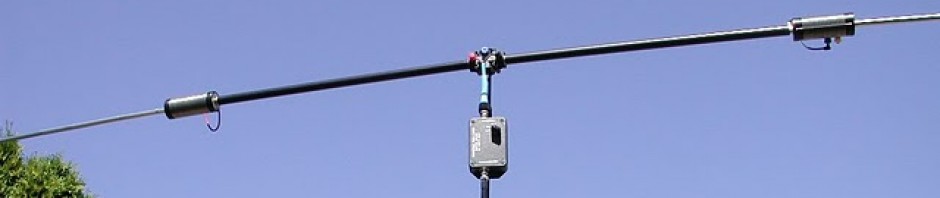
It occurs to me that MFJ is another silent key that will be missed especially on Field Day. This is the first time we’ve tried the MFJ dual band dipole under the Yagi. In the past we generally have wanted to use a 40m Double Extended Zepp fed with window line and tuner but the spacing between the trees for the desirable N-S run has been a problem, and it tends to overlap other station antennas which increases coupling and local interference. So the shorter dualband dipole seemed like an interesting solution. This one was new from the package which is always risky and in inverted vee format under the Yagi it was resonant rather below the bands. The Elecraft KAT500 tuner did match it easily but next year perhaps we’ll put it (or some other wire) up first which will require a couple more line launches but it will be around 80 feet up, well above the Yagi. To keep the feedline away from the Yagi we could offset it a bit, or choose an end or off center fed antenna instead, perhaps an EFHW or a 9:1 not too long OCF wire configuration.
Frank and Alan’s central area station for the Yagi and 80/40 dipole consisted of the Elecraft K3S, a new Hamation band filter and a KAT500 tuner. Dual 100Ah Battleborn lithiums provided station power and didn’t require charging during the FD period.
Oliver was very helpful with Yagi assembly, line handling and general support. Christopher and Chris were also very helpful whenever needed.
On the North side Mike put up a 40m dipole to keep things simple. He launched lines over the trees a bit later and had to contend with more breeze. His 360 foot Quadruple Extended Zepp hasn’t been set up the last few years because the smaller trees have grown up under the Northern area and made it very difficult to get the wire up into the clear. It’s a lot of work to set up but on 40 meters it really shines. We need to figure out a drone installation procedure to get it over all the trees. Mike used his Icom 7610 on the dipole. He had computer problems with his FT8 computer and software configuration so after fighting with that for awhile he switched over to SSB on 40m.
Cal located to the South and coached his guest operator for the GOTA station. Debbie has a new Yaesu FTDX10 she won at Pacificon. They used a Buddipole antenna and made the GOTA contacts on it. Then he set up his station with an Icom 7300 and AH4 to have more fun. He had some issues with his launcher having a loose fitting but it got the job done. We had 7 pneumatic antenna launchers onsite so plenty of backups were available. 🙂
For the logging network we used Cal’s mesh system again for the third year. This four node Ubiquity setup really saturates the area. Each node has a dual band mesh unit on a tripod, a battery and solar panel and one node has a router for DHCP. We don’t connect this network to the internet, it is just for the logging systems. We weren’t as spread out as we sometimes are, so this was more than sufficient for the network. Alan’s Pi based NTP server fired right up and provided GPS based time service aiding the FT8 stations.
This year we had two Starlink Minis so we had true internet coverage. Generally the cellular internet at the Peddler Hill site is iffy so internet has been less than reliable, but with Starlink it was solid. The challenge was finding a location with a clear enough sky view while not being too far away or in the way of places people drive on the site. Frank put his to the West which has a clear low angle sky view but the back side skimmed thru the trees overhead. Alan set his up partway up the knoll to the South which turned out to have a nearly clear sky view. Being farther away the wifi signals were a bit more difficult to get on 5 GHz but 2.4 was ok. Together they carried nearly 50GB of internet traffic over the period.
This year we used release candidate 7 of the python 3 converted version of FDLog. It was nice not having to load Python 2. Some of the new features like block transfers made adding new nodes much quicker when they had to get large fills on the log. There was some confusion about configuring the GOTA node because the related documentation was out of date with respect to all the updates FDLog has had but that was resolved and a new version with improved documentation was started for next year.
This was the first year we’ve used band filters to any significant degree. We generally space out the stations sufficiently but in recent years there have been other non ham groups in the area and we don’t always get to spread out the way we like to. Many of the new radios aren’t as good at operating with strong signals and don’t have transmitters that are as clean as we’d like. Adding a band filter helps a lot, it is amazing how effective these filters are. But it also complicates the stations and requires an outboard antenna switch and tuner because the built in radio units are on the wrong side of the filter.
After the contest period ended we gathered and enjoyed Dawn’s Taco Bar for lunch. Then some departed the site while a few sat back and enjoyed the evening, choosing to stay one more day and finish packing up on Monday for an easier departure.